Trading crypto without a defined strategy is like walking a mountain trail blindfolded. You might have a rough sense of where the market's headed, but volatility has a way of punishing even experienced traders who don't have a plan. A solid trading strategy is what keeps decisions rational when price action gets emotional.
There's no single "correct" strategy, the right approach depends on your experience level, risk tolerance, and how much time you can actually dedicate to watching charts. This guide breaks down what a trading strategy is, the main active and passive approaches used in crypto, and how to figure out which one fits your situation.
What Is a Trading Strategy?
A trading strategy is a predefined plan, a set of rules for entering, managing, and exiting trades. Its core purpose is discipline: keeping fear and greed from overriding your process when the market moves fast.
A solid strategy typically covers four components:
- Entry criteria: the conditions that trigger a trade, based on technical analysis (moving average crossovers, support/resistance breaks, chart patterns), fundamental analysis (news, economic data), sentiment, or some combination.
- Exit criteria: take-profit levels (where you lock in gains) and stop-loss levels (where you cut losses before they compound).
- Position sizing: how much of your total capital you're willing to risk on a single trade.
- Risk management: your maximum acceptable loss over a given period, and the risk/reward ratio you're targeting per trade.
Think of it as your route, your fuel stops, and your speed limit, all defined before you start driving.
Active vs Passive Strategies
Crypto trading strategies generally fall into two camps.
If you have the time and appetite to track the market closely, active strategies are built for you. They aim to capture short-term price swings, which means more trades, faster decisions, and higher risk exposure, but also more upside potential.
If you'd rather take a longer view and skip the day-to-day noise, passive strategies make more sense. The goal here isn't catching every move, it's participating in the market's broader trajectory over time.
Neither approach is inherently better. What matters is matching the strategy to your personality, goals, and available time.
Active Trading Strategies
1. Price Action Trading
Price action strips out indicators entirely and focuses on reading the chart itself, trend lines, candlestick patterns, and formations like head-and-shoulders, triangles, and flags. Traders use support and resistance levels to time entries and exits.
Best for: Traders who want a deeper feel for market structure and prefer not to lean on indicators.
2. Range Trading
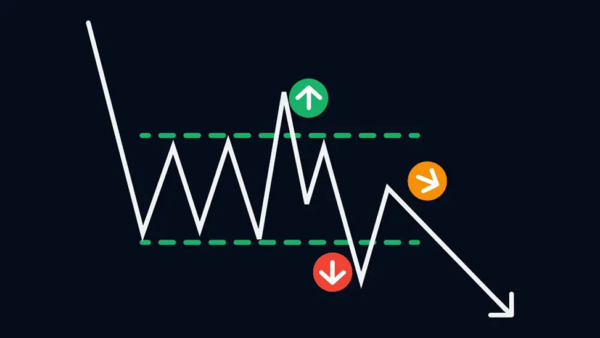
Range trading works when price is stuck between clear support and resistance without a strong trend. Traders often use Bollinger Bands, RSI, or Fibonacci levels to map the range, buying near support and selling near resistance. The real risk here is a breakout, if support or resistance gives way, you need to adjust fast.
Best for: Patient traders comfortable profiting from small moves in sideways markets.
3. Swing Trading
Swing traders aim to capture medium-term price moves, holding positions for days to weeks. Moving averages, Fibonacci levels, RSI, and MACD are common tools for timing entries and exits, with stop-losses used to cap downside if the market turns.
Best for: Traders who can't watch charts all day but want to benefit from medium-term price swings.
4. Scalping
Scalping targets tiny price movements, with trades often lasting seconds to minutes. Scalpers rely on low timeframes (1-minute, 5-minute charts) and indicators like Bollinger Bands or Stochastic to fire off high-frequency entries and exits throughout the day.
Best for: Traders who can watch the market constantly, make fast decisions under pressure, and are comfortable chasing small, frequent gains.
5. Trend Trading
Trend trading means identifying the market's dominant direction up, down, or sideways using moving averages or trend lines, then trading in that direction. Entries typically come after a small pullback against the trend, with stop-losses placed below recent lows (in an uptrend) or above recent highs (in a downtrend). A trailing stop-loss lets you lock in gains as the trend continues.
Best for: Traders who can accurately read market trends and have the patience to ride them over longer stretches. Works best in markets with strong directional momentum.
6. Margin Trading
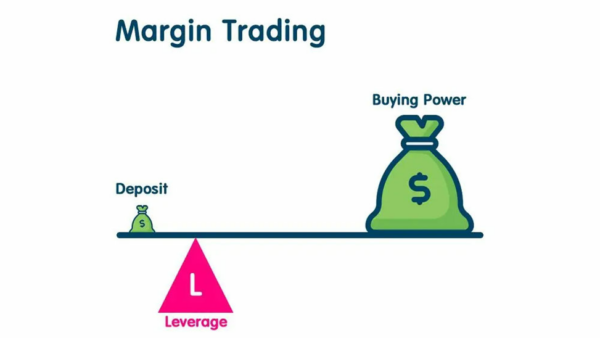
Margin trading isn't an analysis strategy on its own, it's a way of financing larger positions. By borrowing capital from an exchange or broker, traders can open positions larger than their own capital would allow. With 10x leverage, for example, $100 controls a $1,000 position. That leverage amplifies gains, but it amplifies losses just as fast and if the market moves against you, the exchange may liquidate part or all of your position to cover the loss.
Best for: Experienced traders who understand leverage and have strong risk management discipline.
7. Momentum Trading
Momentum traders look for assets already moving strongly in one direction and try to ride that momentum, on the theory that trends tend to continue once established. The hardest part isn't spotting the trend, it's timing the exit before momentum fades or reverses.
Best for: Traders comfortable with technical analysis who are targeting short-to-medium-term gains.
8. Arbitrage Trading
Arbitrage means profiting from price differences for the same asset across markets, buying Bitcoin at $70,000 on one exchange and selling it at $70,100 on another, for instance. Triangular arbitrage extends this idea across three assets (say, converting USDT to BTC, BTC to ETH, and back to USDT). Speed, technical infrastructure, and capital are essential here, since slippage and fees can quickly erase thin margins.
Best for: Experienced traders, often running bots or automated scripts.
9. Algorithmic Trading
Algorithmic trading automates buy and sell decisions based on a predefined rule set, executed by software rather than a human clicking buttons. Building custom algorithms generally requires programming knowledge, but pre-built trading bots offer a practical alternative for traders without a coding background. The biggest advantage is removing emotion, fear and greed from execution. That said, even with a ready-made bot, getting good results still depends on understanding and correctly configuring its parameters.
Best for: Professional traders, institutions, and developers. Beginners can use pre-built bots.
10. High-Frequency Trading (HFT)
HFT is an extreme, highly specialized form of algorithmic trading, executing enormous volumes of trades in fractions of a second based on tiny price discrepancies or rapid reactions to news. Success depends almost entirely on minimizing latency, which requires serious infrastructure, fast connections, advanced bots, deep order-book access, and proximity to exchange servers.
Best for: Specialized firms, hedge funds, and institutions with the infrastructure to support it.
Passive Trading Strategies
Passive strategies suit traders who want long-term exposure to crypto without the daily grind of chart-watching. The focus shifts to overall market direction, portfolio diversification, and periodic review rather than constant monitoring.
1. Buy & Hold (HODL)
You buy an asset based on fundamental conviction and hold it long-term, largely ignoring short-term volatility or even multi-month corrections. Someone who bought Bitcoin in 2010 and held through every swing is the classic example of this strategy paying off — though it only works with assets you genuinely believe have long-term staying power.
2. Dollar-Cost Averaging (DCA)
Instead of investing a lump sum at once, DCA spreads purchases over regular intervals, weekly or monthly, with a fixed dollar amount each time. If you're putting $1,200 into Ethereum over a year, that's $100 a month regardless of price. Some months you'll buy more units when price is low, fewer when it's high, and the result is an averaged-out entry price without needing to time the market.
3. Long-Term Portfolio Investing
This means building a diversified basket of digital assets to spread risk across projects, typically anchored by established assets like Bitcoin and Ethereum, with a smaller allocation to higher-potential, emerging projects. Management is light: a review every three to six months rather than constant monitoring.
4. Crypto Index Funds
Similar to traditional index funds, crypto index funds bundle a diversified basket of top digital assets (or crypto ETFs) into a single investment. Buying into the fund gives you exposure across multiple assets without managing each position individually.
Tips for Trading Crypto Successfully
- Manage risk and capital carefully: Never risk more than 2–3% of total capital on a single trade, and always use a stop-loss.
- Keep a trading journal: Log entry reasoning, strategy, stop-loss/take-profit levels, outcome, and emotional state for every trade. Patterns in your journal reveal why trades succeed or fail.
- Respect trading psychology: Managing fear, greed, and anxiety is one of the hardest parts of trading. Discipline means following your plan, not your emotions.
- Diversify smartly: Avoid concentrating capital in a single asset or asset class.
- Avoid impulsive decisions: Don't trade off breaking news or rumors; stick to your analysis and strategy.
- Keep learning: Markets evolve constantly; staying current on trends and economic news protects your edge.
- Combine fundamental and technical analysis: Together they give a more complete market picture than either alone.
- Be patient: You don't need to be in the market constantly. Wait for setups that actually match your strategy.
Final Thoughts
Crypto's volatility makes it exciting and genuinely risky. Trading without a plan tends to end one way. The good news is there's no shortage of proven strategies to choose from, whether you're drawn to short-term technical trading or long-term fundamental-driven investing. The right approach isn't the one that worked for someone else, it's the one that matches your goals, risk tolerance, available time, and experience level.
Getting there takes education, testing (ideally on a demo account first), and starting small. Discipline, consistent review, and a willingness to correct mistakes are what separate traders who improve over time from those who don't.
FAQ
What is a trading strategy? A predefined set of rules traders use to decide when to enter, exit, and manage positions, designed to reduce emotional decision-making and improve consistency.
What's the best strategy for crypto trading? There isn't a universal "best" day trading, scalping, swing trading, and strategies built on technical or fundamental analysis are all common, and the right fit depends on the trader.
How do I find the right strategy for me? Start by defining your goals and risk tolerance, learn a few different approaches, backtest and demo-trade your chosen strategy, then start live with small capital.
What's the best strategy for beginners? Simpler, lower-risk strategies tend to be more forgiving for beginners than fast-paced, high-leverage approaches.
How do I set a stop-loss? It depends on your strategy, market volatility, and risk tolerance. A common approach is placing it just below a key support level (in an uptrend) or basing it on a fixed percentage of capital, often 1-2% for beginners.
Do trading strategies need to change over time? Yes. Market conditions shift constantly, so it's worth reviewing strategy performance periodically and adjusting when returns decline.
How important is psychology in trading? Extremely. Even a strong strategy fails if executed with fear, greed, or false hope. Discipline, especially during volatile stretches is what keeps a trader following their plan instead of their emotions.
Can I trade with a small amount of capital? Yes, what matters more is process, not position size. Starting small lets you learn risk management before scaling up.
What's the difference between technical and fundamental analysis in strategy selection? Technical analysis reads charts and patterns to time entries and exits, and suits shorter-term trading. Fundamental analysis evaluates an asset's underlying value and is better suited to long-term positioning.