What Is Biconomy (BICO)? A Full Breakdown

One of the biggest barriers to mainstream Web3 adoption isn't the concept, it's the friction. Gas fees, cross-chain transfers, and wallet management make onboarding genuinely difficult for anyone outside crypto-native circles.
Biconomy is one of the infrastructure protocols built specifically to remove that friction. Rather than asking users to understand blockchain mechanics, it abstracts the complexity into the background, aiming for a user experience closer to Web2 apps than typical DeFi products. The goal isn't just solving the classic blockchain trilemma of scalability, security, and decentralization it's building an on-ramp for mainstream users who'd otherwise bounce off Web3's technical overhead.
Trading volume for BICO jumped 301% in recent weeks alongside a sharp price spike, pulling in fresh investor attention and renewed speculation about where the project goes from here. Below, we break down what Biconomy actually does, how its architecture works and more importantly for traders what's really behind the recent move.
What Does Biconomy Do?
Biconomy is a modular infrastructure protocol built to simplify the Web3 user experience. It hides blockchain complexity gas fees, cross-chain interactions, transaction management from the end user, while giving developers a toolkit to build multi-chain applications without wrestling with underlying blockchain layers directly.
Its core capabilities include:
- Multi-chain execution with a single signature: Users can approve one transaction or workflow and have it execute across multiple networks.
- Gas fee abstraction: No native token required to pay gas users can pay with any of more than 10,000 ERC-20 tokens, and developers can even cover fees on users' behalf.
- Faster development cycles: Pre-built infrastructure tooling significantly cuts the time needed to ship multi-chain features, letting teams focus on product rather than blockchain plumbing.
- Enterprise-grade reliability: Built to process transactions at scale with high uptime, suited for institutional and finance-grade use cases.
How Biconomy Works Under the Hood
At the core of Biconomy's architecture is the concept of meta-transactions shifting fee-payment complexity away from the user and onto the infrastructure layer. In practice, this means a wallet with zero balance can still transact, because a third party (or the app developer) covers the gas cost on the user's behalf.
But Biconomy's design goes beyond just removing gas friction. It's built as a full execution-abstraction layer, resting on three main components:
Nexus Smart Accounts Nexus isn't a standalone app it's a smart wallet infrastructure layer: a set of smart contracts built on the ERC-7579 standard, already used by wallets like Trust Wallet. Nexus turns a simple address into a programmable smart account, letting users log in with passwords or passkeys, reducing human error, and bundling multiple operations into a single click.
Supertransaction API This is the engine behind multi-step operations. It lets developers implement complex DeFi strategies through simple API calls letting a user mint a token, swap it, and bridge it to another chain, all with a single signature across multiple chains simultaneously. Built on open standards like ERC-7579, it reportedly cuts multi-chain development time by up to 90%.
Modular Execution Environment This is the runtime layer Biconomy's products run on, letting developers deploy high-performance, multi-chain applications without touching infrastructure directly. With a claimed 99.9% uptime and more than 70 million transactions processed, it's positioned for finance-grade and enterprise use cases.
Biconomy's Core Products
Built on top of this architecture, Biconomy ships three flagship products, each targeting a specific Web3 pain point:
Mexa: Gasless Transactions Mexa lets developers implement gasless transactions in dApps, supporting either the EIP-2771 standard or custom implementations. The network relies on two roles: relayers, who execute meta-transactions, and validators, who verify them for security. A JavaScript SDK makes integration straightforward across use cases from DEXs to blockchain games.
Forward: Flexible Fee Payments One of Ethereum's biggest UX limitations is requiring native ETH just to pay gas. Forward lets users pay transaction fees in ERC-20 tokens like USDT, USDC, and DAI instead, managing gas logistics in the background even during network congestion.
Hyphen: Cross-Chain Bridge Moving assets between layers say, from an L2 back to L1 is typically slow and expensive. Hyphen streamlines cross-chain token transfers while minimizing costs, maintaining liquidity on both sides of the bridge to enable direct interaction between networks.
BICO Tokenomics
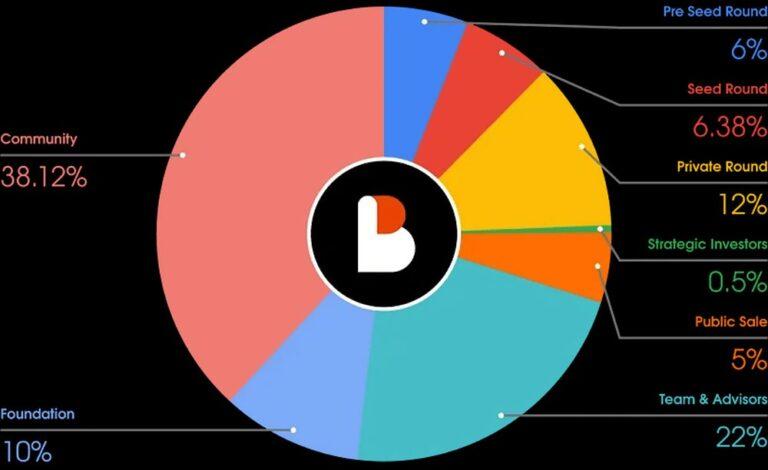
BICO is Biconomy's native utility token, with a total supply of 1 billion and roughly 985 million (98.5%) already in circulation. It serves three core functions:
- Network fees: Node operators (relayers and validators) are paid in BICO for processing transactions.
- Governance: Holders can vote on protocol changes, treasury allocation, and other network parameters.
- Staking incentives: Node operators, stakers, and liquidity providers earn BICO rewards based on their contribution to the protocol.
Founding Team and History

Biconomy was founded in 2019 by an international team led by Ahmed Al-Balaghi, alongside software engineer Sachin Tomar and blockchain specialist Aniket Jindal. After raising $9 million early on, the team launched its first platform to simplify transaction flows, followed in 2020 by Relayer-as-a-Service, which made smart contract interaction significantly easier.
By early 2021, Biconomy had gained real traction across the developer community. Mid-2021 brought its meta-transaction service, cutting gas costs and improving overall UX. The project expanded steadily through 2022 and has continued building since, positioning itself as core infrastructure across a growing set of decentralized applications.
Notable Integrations
Biconomy's adoption story is arguably more telling than its roadmap:
- Gemini Wallet uses the Nexus smart account stack for self-custodial, passkey-based access.
- Trust Wallet, Magic Newton, and Animoca Brands all rely on Nexus to power smart account functionality.
- Kinexys by JPMorgan has adopted Biconomy's execution layer to simplify complex institutional financial flows on-chain.
- AskGina, an AI trading agent, uses Biconomy's Supertransaction capability to go from concept to product in a matter of weeks.
- Wayfinder, an intent execution engine, settles supertransactions using the PROMPT token demonstrating custom gas token support in practice.
Backing from Fortune 500-adjacent partners like JPMorgan lends real institutional credibility beyond typical crypto-native integrations.
Why Did BICO Price Surge Recently?
BICO jumped more than 90% in 24 hours, reaching roughly $0.0632 with a market cap near $64 million. The main catalyst appears to be news that the meme coin Dream Bowl I may list on the Biconomy exchange. Scilex Holding, a Nasdaq-listed public company, announced on June 16, 2026, that Dream Bowl could list starting June 23, 2026.
It's worth being precise here: this news is about Dream Bowl listing on the Biconomy exchange, it has no direct connection to the BICO token itself. Still, the market treated it as a reason to pay attention to the Biconomy ecosystem more broadly.
Other contributing factors:
- Volume surge and momentum traders: BICO trading volume spiked well above its normal average, a pattern typically associated with momentum traders and short-term speculators piling in after a news catalyst or technical breakout, signaling real liquidity rather than just rumor-driven noise.
- Resistance breakout: BICO broke through key resistance levels on strong volume, technical confirmation that reinforced the move beyond just headline-driven buying.
- Whale accumulation: Increased activity has correlated with notable buying from large wallets, adding upward pressure.
- Ecosystem attention spillover: News about a third-party token listing on Biconomy's exchange redirected market attention toward the broader Biconomy ecosystem itself.
- Positive broader market conditions: With Bitcoin and Ethereum trending upward, risk appetite across altcoins tends to increase, and smaller-cap tokens like BICO often see amplified moves during these windows.
- Fundamental narrative tailwinds: Biconomy's continued work on smart account infrastructure, plus its contribution to a new Ethereum standard (ERC-8211) enabling multiple blockchain operations in a single transaction, has added a longer-term narrative layer to the short-term price action.
BICO Price Outlook: Key Levels to Watch
There's no confirmed announcement of a major partnership or ecosystem shift behind this move meaning the rally is running largely on news-driven momentum and technicals rather than a fundamental catalyst. The altcoin season index has ticked up to 43, hinting at some rotation out of Bitcoin, but that alone doesn't explain BICO's outperformance.
Short-term outlook is bullish but carries elevated risk, and depends on a few key factors:
- Support and resistance: Holding above $0.055 support keeps $0.065–$0.07 resistance in play. A break below $0.045 could trigger fast profit-taking toward $0.035.
- Volume follow-through: Sustaining volume above $100 million is important for confirming genuine market interest, a volume drop-off often precedes consolidation or a pullback.
- Bitcoin stability: BTC holding above $63,500 would provide a more supportive backdrop for altcoin speculation generally.
Medium and long-term price direction will likely hinge more on real protocol adoption than on this week's news cycle. If Biconomy continues gaining enterprise integrations and expanding its developer ecosystem, there's room for a more durable trend to form. Its already-high circulating supply also means future unlock pressure is comparatively low versus many peers, a structural tailwind if real demand materializes.
Bottom Line
Biconomy is a modular infrastructure protocol solving real Web3 UX problems gasless transactions, single-signature multi-chain execution, and smart wallet infrastructure already adopted by names like Trust Wallet and JPMorgan's Kinexys platform.
The recent BICO price surge, though, is driven mostly by a third-party listing announcement, a volume spike, and favorable market conditions, not a fundamental shift in the protocol itself. That combination can move fast in both directions. Traders should watch the $0.055 support level and volume trends closely, since without a clear ongoing catalyst, this kind of move stays vulnerable to a sharp pullback.
As always, this isn't financial advice, do your own research and size positions according to your own risk tolerance.