Bull Market vs. Bear Market: What Do They Really Mean?
Financial markets never move in a straight line. Prices rise, prices fall, and these swings settle into broader trends that traders describe as bull markets and bear markets. Understanding which phase you're in is often the difference between a calculated decision and a reactive one.
When prices climb steadily over a period and optimism dominates the market, that's a bull market. When prices trend downward and confidence erodes, that's a bear market. A common threshold for calling either phase is a sustained move of roughly 20% or more. though in crypto, given the volatility, that shift can happen over much shorter timeframes than in traditional markets.
Neither phase guarantees an outcome. A bull market isn't automatically a safe bet, and a bear market isn't purely a period of losses. Each has its own logic, and traders who adjust their behavior accordingly tend to fare better than those who apply the same playbook regardless of conditions.
What Is a Bull Market and What Defines It?
A bull market is a sustained period of rising prices paired with a generally optimistic outlook. As demand increases, prices climb further and that momentum tends to feed on itself. Rising prices build confidence, confidence attracts new capital, and that capital pushes prices higher still. This reinforcing cycle continues as long as the underlying optimism holds.

In crypto specifically, bull markets tend to bring rapid price appreciation, higher trading volume, and a wave of new users entering the space. Even projects with limited fundamental value can see meaningful gains simply by riding the broader wave of positive sentiment.
Key characteristics of a bull market include:
- A sustained upward price trend
- Demand consistently outpacing supply
- Growing investor confidence and optimism
- Rising trading volume and fresh capital inflows
- Heavy positive media coverage
Bull markets offer some of the best profit opportunities in the market cycle, but they also carry real risks, including asset bubbles and overvaluation.
What Is a Bear Market and What Are Its Warning Signs?
A bear market is a sustained downward trend paired with pessimism and uncertainty. Supply increases, demand shrinks, and investors become more inclined to sell than hold.
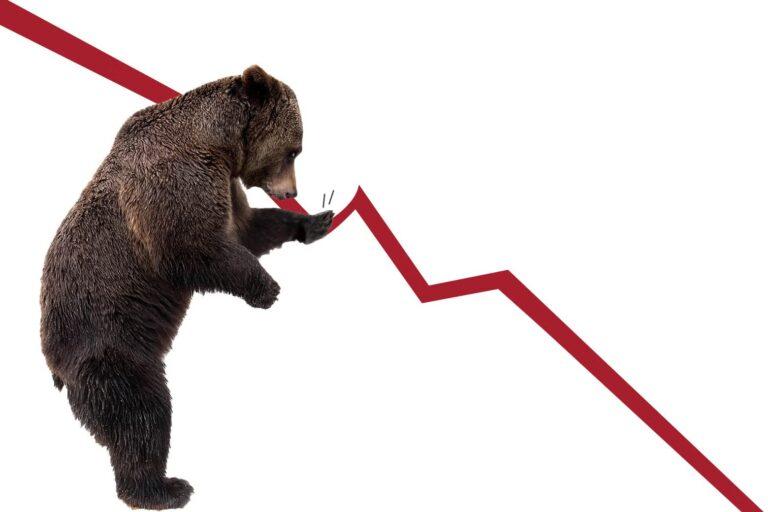
Where bull markets are driven by hope and capital inflows, bear markets run on a reverse cycle: falling prices trigger fear, fear intensifies selling pressure, and that pressure keeps the trend going as long as the negative psychology persists. Crypto bear markets tend to be sharper and faster than their traditional-market counterparts, high volatility, rapid reactions to bad news, and emotional selling can make crypto downturns unusually deep and drawn out.
Common signs of a bear market include:
- A sustained decline in prices over a defined period
- Supply outpacing demand
- Falling confidence and capital leaving the market
- Declining trading volume and thinner liquidity
- Sharp reactions to negative news, with positive news largely ignored
Despite the psychological toll, bear markets can present real opportunities, particularly for investors with a long-term horizon who are comfortable buying at lower valuations.
Most trading mistakes happen when a strategy built for one market phase gets applied to the opposite one. Success in trading depends less on predicting price and more on adapting behavior to the market's actual condition.
How to Tell If the Market Is Bullish or Bearish
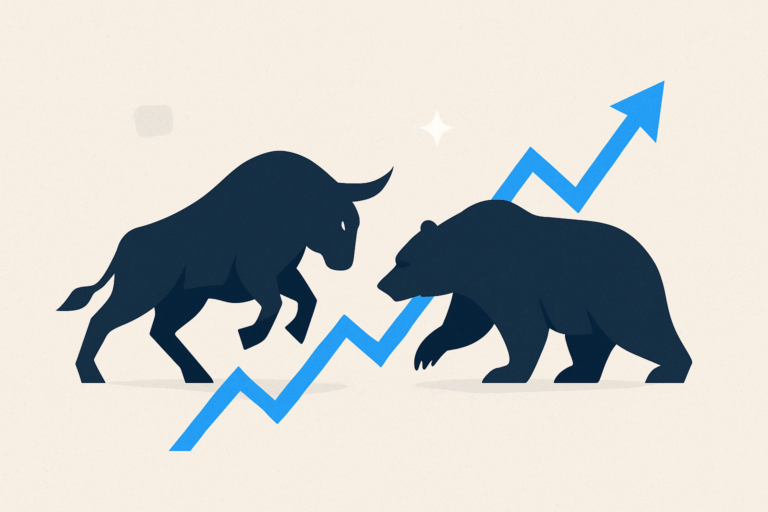
Markets rarely flip from bullish to bearish overnight, the shift usually shows up gradually, through a combination of signals rather than any single indicator.
At the most basic level, price structure matters most. A pattern of higher highs and higher lows generally signals a bull phase; lower highs and lower lows point to a bearish trend. But price action alone isn't enough, a fuller picture requires looking at several factors together:
1. Trading volume behavior. In bull markets, rising prices are typically backed by rising volume, a sign that real demand is entering the market. In bear markets, falling volume or heavy selling on high volume signals weakening demand.
2. Market sentiment. Optimism, positive headlines, and new investors entering the market usually accompany bullish phases. Fear, hesitation, and capital exits mark bearish ones. Tools like the Fear & Greed Index are commonly used to gauge this.
3. Macroeconomic and news factors. Central bank decisions, interest rates, inflation, and geopolitical events can all shift market direction. In crypto specifically, regulatory news and institutional adoption carry outsized weight.
4. On-chain data. Exchange inflows and outflows, whale activity, and long-term holding patterns can offer sharper signals. Rising exchange inflows, for instance, often point to increasing sell pressure.
5. Key technical indicators. Moving averages, the Death Cross and Golden Cross, RSI, and longer-term trend analysis all help build a clearer picture of where the market stands.
No single signal tells the whole story. Reading the market well means combining several of these factors into a consistent framework rather than reacting to one data point or a passing feeling.
Trading Strategy: How to Approach Bull and Bear Markets Differently
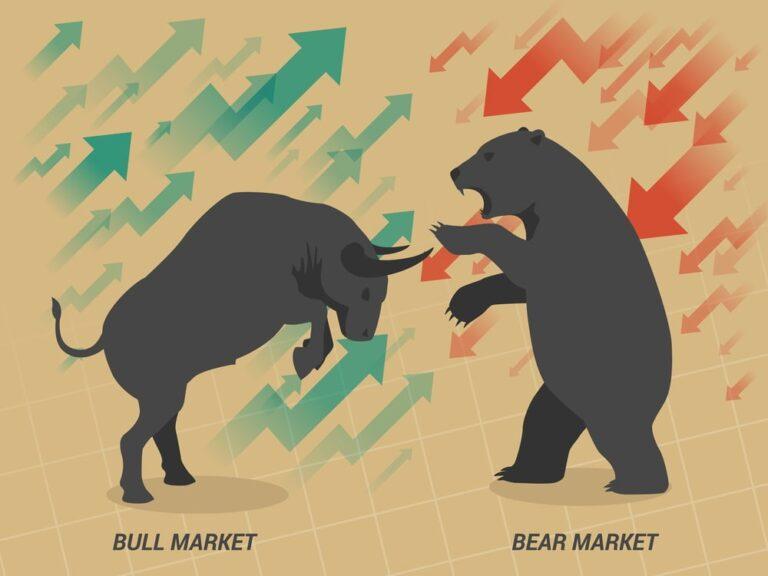
Recognizing a trend only pays off once it shapes real decisions. This is where experienced traders separate themselves from newer ones by adapting their approach to match the market's actual structure, rather than applying one strategy regardless of conditions.
In a bull market, the core logic is trend continuation. The focus shifts to riding the trend and buying into short-term pullbacks rather than chasing highs, entering after a temporary correction tends to produce a better risk-to-reward setup. Holding positions through the medium term can also work well here, given the higher likelihood of continued upside.
In a bear market, the approach needs to be more conservative. The priority shifts from maximizing gains to preserving capital. Traders typically size positions smaller, choose entries more carefully, and avoid impulsive buying. Scaling into positions gradually at lower price levels is a common way to manage risk in this environment.
One key difference between the two phases is how volatility gets interpreted. In a bull market, short-term dips are often viewed as opportunities. In a bear market, the same volatility can signal continued weakness, which is exactly why risk management and stop-losses matter more during downturns.
There's no single strategy that works in every condition. Success comes down to flexibility and the ability to read what the market is actually doing, not from finding the one "correct" approach and sticking to it regardless of context.
Should You Buy in a Bull Market or a Bear Market? Timing Your Entry
One of the most common questions traders ask is when the "best" time to enter the market really is. There's no universal answer, the right entry point depends on your strategy, risk tolerance, and time horizon.
In a bull market, the general direction carries less directional risk, but the challenge is that prices may already be elevated. Many traders prefer waiting for a pullback rather than buying at fresh highs.
In a bear market, lower prices can look attractive, but the risk is not knowing exactly when the decline will end. A single lump-sum entry can be risky here, which is why dollar-cost averaging (DCA) is a commonly used approach in downturns.
In practice, many experienced investors blend both approaches: scaling in gradually with careful risk management during downtrends, and using the broader uptrend to manage and grow positions during bull phases. Rather than chasing a perfect entry point, the more reliable approach is having a clear plan and sticking to it.
The Role of Crypto in Bull and Bear Markets
Because crypto trades nearly 24/7 and offers high liquidity with easy access, it plays a distinct role in portfolio management across both market phases.
In bull markets, crypto assets are often viewed as high-growth opportunities new capital, heavy media attention, and rapid price appreciation draw in traders looking to capture the move. Quick access to real-time pricing and the ability to act at the right moment matter a great deal here.
In bear markets, crypto's role shifts toward capital preservation,leaning on stablecoins, trading smaller size, and choosing entries more selectively. That said, downturns can still offer genuine opportunities to accumulate at lower valuations.
In either environment, having access to a platform that shows real-time pricing and makes buying straightforward matters. Users can track live crypto prices through Nobitex and act according to current market conditions, whether that means buying, holding, or managing existing positions.
Crypto's volatility means risk is always present, but that same volatility is also what makes it one of the most dynamic spaces to trade in. Long-term success here comes down to knowledge, strategy, and disciplined risk management.
Common Trader Mistakes in Bull and Bear Markets

A large share of trading losses come not from bad analysis, but from poor behavior in response to market conditions. Each phase has its own set of common pitfalls.
In bull markets, the most common mistake is overconfidence in trend continuation assuming the rally has no ceiling and entering at any price level without regard for risk. This behavior tends to cluster near price tops and leads to heavy losses at the first real correction. Ignoring position sizing and over-leveraging are also common in this phase.
In bear markets, mistakes tend to stem from fear and emotional decision-making. Selling at the bottom when psychological pressure peaks and investors exit without analysis is one of the most damaging. Trying to catch the exact bottom is another common error, often leading to early entries and compounding losses.
Some mistakes show up in both phases:
- Trading on emotion or breaking news without a defined strategy
- No stop-loss or exit plan
- Fixating on short-term gains while ignoring the broader market picture
- Following the crowd (FOMO and FUD) instead of independent analysis
What separates successful traders from the rest isn't just analytical skill, it's the ability to control behavior and stick to a consistent framework. Markets change; risk management and discipline don't.
Final Thoughts: Aligning With Market Cycles
Financial markets, crypto especially move through recurring cycles of expansion and contraction. Trying to predict these cycles with precision is tempting, but rarely reliable in practice. What matters more is the ability to adapt to changing conditions and make decisions based on what's actually happening, not what you expect to happen.
Understanding the difference between bull and bear markets is the first step. Each phase has its own logic, behavior, and opportunities, and applying a single fixed approach across both rarely works well. Successful trading means aligning strategy, risk management, and expectations with the market's actual structure.
Risk can't be eliminated entirely, but with the right knowledge, the right tools, and a consistent plan, it can be managed effectively in either direction of the cycle.
FAQ
What's the exact difference between a bull and a bear market? A bull market is a period of rising prices with positive investor sentiment. A bear market is marked by falling prices and a dominant mood of fear and uncertainty.
How do I know if the crypto market has turned bullish? Sustained price increases, rising trading volume, new capital inflows, and positive media coverage are the main signs, though it's best to confirm them together rather than relying on just one.
Can you still profit in a bear market? Yes, but it requires a different approach focusing on risk management, gradual buying at lower price levels, and taking advantage of short-term volatility.
When is the best time to buy crypto? There's no single correct answer. Many investors buy gradually during downtrends and manage profits as prices rise during uptrends.
Should you always buy during a bull market? Not necessarily. Buying without regard to price level can be risky even in an uptrend. It's usually better to enter during pullbacks rather than at the peak of hype.
What's the biggest mistake traders make in these markets? Emotional decision-making, lack of a clear strategy, and poor risk management are the most common mistakes in both bull and bear markets.