The Pattern Every Trader Knows (and Repeats Anyway)
Warren Buffett's advice is simple: be fearful when others are greedy, and greedy when others are fearful. Simple to say, brutally hard to execute in a market as volatile as crypto.
Building lasting wealth isn't really about picking the right coin or timing one good entry. It comes down to discipline, a long-term view, and a plan that holds up even when emotions are running hottest, because in crypto, they usually are.
Despite unprecedented access to data, charts, and analysis, traders keep making the same mistake: buying when an asset is hot and prices are near the top, then selling when fear takes over and prices have already bottomed. That's not an information problem. It's a psychology problem.
Key Takeaways
- Buying tops and selling bottoms is driven by emotional bias, not lack of information.
- Market cycles follow a predictable emotional arc: optimism, euphoria, anxiety, panic, despair and hope.
- FOMO, loss aversion, recency bias, confirmation bias, overconfidence, and anchoring are the core psychological traps.
- A trading plan, DCA, and stop-losses are the most effective structural defenses against emotional decisions.
Market Cycles Follow an Emotional Script
Markets move in repeating cycles, periods of growth and euphoria followed by correction and decline. The specific timing and catalyst differ every cycle, but the emotional pattern traders go through stays remarkably consistent.
Early in an uptrend, optimism builds. Prices rise, sentiment turns positive, confidence grows. That optimism escalates into excitement, and eventually into euphoria. The stage where profits start to feel guaranteed. This is exactly when the largest wave of new capital enters the market, often right as prices approach their cycle top. Buying feels rational because "everyone else is buying."
Eventually, momentum slows or volatility spikes. Anxiety creeps in. Some deny the shift is happening; others start questioning their strategy. As the decline continues, fear takes over leading to losses being locked in and capital pulled from the market "until things calm down."
At the deepest point of the cycle, panic and despair set in. Prices are down sharply, negative headlines dominate, and from a purely logical standpoint this is often the best buying opportunity of the cycle. Emotionally, though, it's the hardest moment to act. Many capitulate here, selling into losses that can take years to recover.
Then the cycle turns. Stability returns, hope builds, optimism reappears. Traders who held through the bottom start seeing early signs of recovery. Those who exited at peak fear typically re-enter late missing a meaningful chunk of the next leg up.
Understanding this cycle and more importantly, recognizing your own emotional reaction at each stage is one of the most useful skills a trader can develop. The data is logical. Trader behavior often isn't. That gap is where market psychology determines who buys the top and who sells the bottom.
Why Traders Buy High and Sell Low: The Core Psychological Traps
Even experienced traders fall into emotionally-driven decisions that undo an otherwise sound strategy. Everyone knows the goal is to buy low and sell high, but crypto's news cycle, social media, and sharp intraday swings consistently push behavior the opposite direction.
Herd Behavior and FOMO

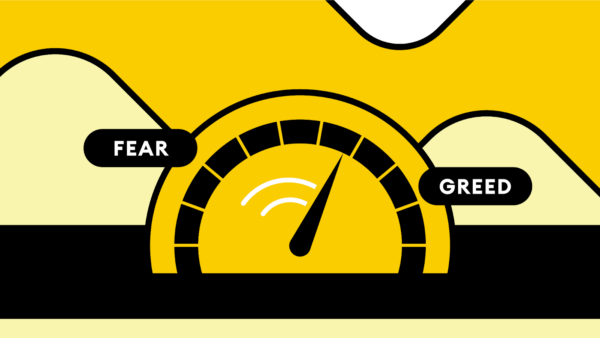
When a market is rallying and it looks like everyone's profiting, the fear of missing out kicks in hard. This is herd behavior, the instinct to follow the crowd even when it conflicts with your own analysis or strategy.
FOMO is one of the most common reasons traders buy at market tops. During major bull runs, capital floods into trending altcoins and hyped projects not because of fundamentals, but because "everyone else is buying."
A real example: Bitcoin's rally into late 2024 pushed prices toward $100,000, eventually peaking near $106,000. Much of that capital entered with little regard for valuation or cycle position. By March 2025, price had fallen to around $79,500, before later recovering above $87,000. It's a clean illustration of how FOMO pushes traders into rushed, high-risk entries near cycle tops.
Loss Aversion: When Fear Beats Logic
On the opposite end sits loss aversion, one of the strongest psychological biases in trading. Research suggests the pain of a loss is felt roughly twice as intensely as the pleasure of an equivalent gain.
In a market where double-digit drawdowns happen in days, this bias drives panic selling. Traders often exit not because an asset's fundamentals changed, but simply to stop the bleeding.
Recency Bias: Mistaking "Right Now" for "Always"
Extending recent trends indefinitely into the future is a common trap. After a long uptrend, traders start believing "there's no more downside left", leading to oversized risk-taking and aggressive position sizing.
The same bias runs in reverse during downtrends. After a prolonged decline, pessimism takes over completely, and traders convince themselves the market will never recover, even though history consistently says otherwise. This mindset tends to push people to abandon their strategy at exactly the worst possible time.
Confirmation Bias: Seeing Only What You Want to See
Confirmation bias is the tendency to seek out and believe information that supports what you already think, while dismissing anything that contradicts it.
During a bubble, a trader might only engage with overly bullish analysis, repeating "this time it's different" to themselves. During a crash, the same person might only consume doom-and-gloom headlines, ignoring any sign of stabilization. Either way, objective decision-making erodes.
False Confidence: The Hidden Enemy
Crypto's speculative, high-emotion environment breeds overconfidence fast. A few winning trades can convince newer traders they've "figured out the market" leading to heavy leverage, ignored stop-losses, and entries into projects without proper research. The issue here isn't a lack of information, it's misplaced confidence.
Anchoring: Getting Stuck on a Number
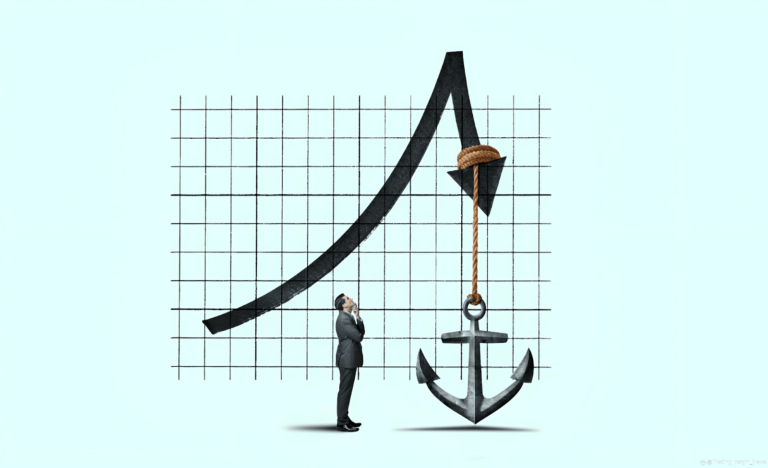
Anchoring happens when your mind locks onto a specific price usually your entry point. Someone who bought Bitcoin at $106,000 might hold for years waiting for a return to that level, even as market conditions change entirely. This bias makes it hard to adapt to new information, and it's why so many holders cling to declining assets purely hoping to "get back to even."
How to Avoid These Psychological Traps
You can't control the market, but you can control your own behavior. Here's what actually works.
1. Build a Clear Trading Plan
Your trading plan is your map through a noisy, emotional market. Before entering any position, define your profit target, exit price, maximum acceptable loss, and whether the trade fits your broader strategy. Planning ahead reduces the emotional pull that leads to impulsive entries near market tops.
2. Use Dollar-Cost Averaging (DCA)
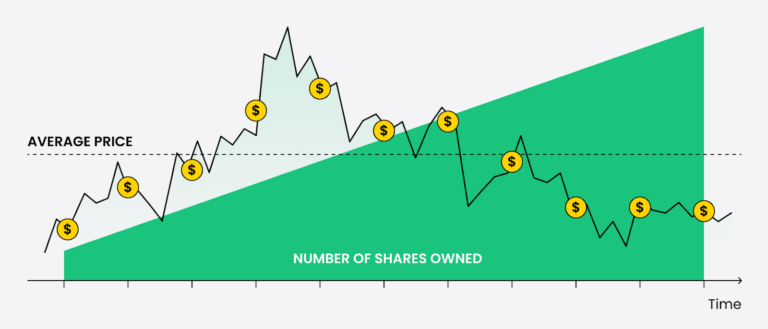
DCA means investing fixed amounts at regular intervals regardless of short-term price action. It smooths out volatility and takes FOMO out of the equation, instead of chasing the "perfect bottom," you accumulate steadily over time. It's not a fix for a fundamentally weak project, but it does make your decision-making systematic rather than emotional.
3. Set a Stop-Loss
A stop-loss is one of the simplest, most underused risk management tools available. It automatically exits a position at a predefined price to prevent catastrophic losses. Terra (LUNA)'s 2022 collapse is a stark reminder, many traders without stop-losses lost their entire position. A stop-loss doesn't guarantee you're right; it guarantees you stay in the game long enough to recover from being wrong.
4. Manage Your Emotions, Not Just Your Trades
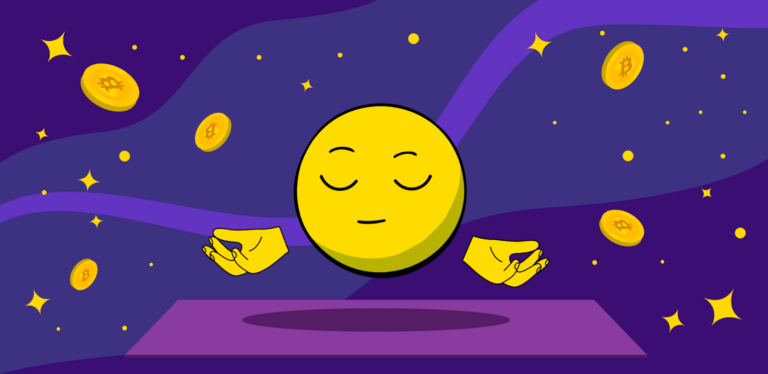
Trading is a mental discipline as much as a numbers game. Before entering a trade, ask yourself: Is this decision driven by fear or greed? Would I still make this choice without the current excitement? Have I actually done the research? Mental clarity matters more than any indicator.
5. Learn From Your Mistakes
Every trader makes bad calls, what separates successful ones is reviewing those decisions rather than repeating them. Keeping a trading journal, logging entries, exits, and reasoning for both wins and losses, reveals behavioral patterns over time that are hard to spot in the moment.
6. Focus on What You Can Control
No one controls market direction; not you, not analysts, not influencers. What you can control: position sizing, portfolio diversification, risk management, custody, and cost management. Focusing here builds a sense of stability even when the market itself is chaotic.
7. Filter Signal From Noise
Financial media runs on urgency, a correction becomes a "crash," a slowdown becomes a "crisis." Staying informed matters, but reacting to every headline doesn't. One of the most valuable skills in crypto trading is telling the difference between information that actually matters and noise designed to trigger a reaction.
8. Take Rebalancing Seriously
Rebalancing means periodically trimming positions that have grown outsized and adding to those that have lagged your target allocation. It's a built-in counter to emotional bias forcing you to sell into euphoria and buy into despair, the exact opposite of what instinct tells you to do. It keeps your portfolio aligned with your original strategy instead of the market's mood.

Bottom Line
Buying low and selling high sounds simple. In practice, even experienced traders repeatedly do the opposite, not from lack of data, but from psychology. FOMO, loss aversion, recency bias, confirmation bias, overconfidence, and anchoring all push decisions toward buying tops and selling bottoms.
Recognizing these patterns and understanding the emotional cycle of optimism, euphoria, anxiety, fear, and hope that markets move through is one of the most valuable edges a trader can build. You can't control the cycle. You can control how you respond to it. Long-term success in crypto comes down to discipline, risk management, and sticking to a plan, not predicting the market perfectly.
FAQ
Why do we always buy the top and sell the bottom? It's mostly driven by psychological biases like FOMO, loss aversion, and recency bias, in-the-moment emotions overriding rational decision-making.
What is FOMO and how does it affect trading? Fear of missing out pushes traders to enter without analysis when everyone else appears to be profiting, usually near market tops, leading to rushed, high-risk entries.
What is loss aversion and how does it drive selling at the bottom? Loss aversion means the pain of a loss feels stronger than the pleasure of an equivalent gain. As prices fall, fear of further loss triggers early selling, even without any change in fundamentals.
What are confirmation bias and anchoring? Confirmation bias leads traders to seek out information that supports their existing view while ignoring contradicting data. Anchoring causes traders to fixate on their entry price, making it hard to adapt as market conditions shift.
How can you avoid these psychological traps in crypto? Build a clear trading plan, set stop-losses, use DCA, manage your emotional state, learn from past trades, and focus on what's actually within your control like position sizing and diversification.
Can the market be predicted? No, cycles and volatility can't be forecast with precision. But your reactions to them can be managed, and disciplined execution over time is what drives long-term returns.