Stop Loss and Take Profit: The Two Orders Every Crypto Trader Should Understand
Crypto markets move fast, and that volatility cuts both ways. It creates opportunity, but it can also turn a small loss into a large one within minutes. This is exactly why stop loss and take profit orders exist. They let a trader define, in advance, the exact price at which a losing trade gets closed and the exact price at which profit gets locked in, without having to watch charts around the clock.
You don't need to be a full-time trader to use them. Once you understand how the two orders work on your exchange, setting them takes a couple of minutes per trade.
What Is a Stop Loss in Crypto Trading?
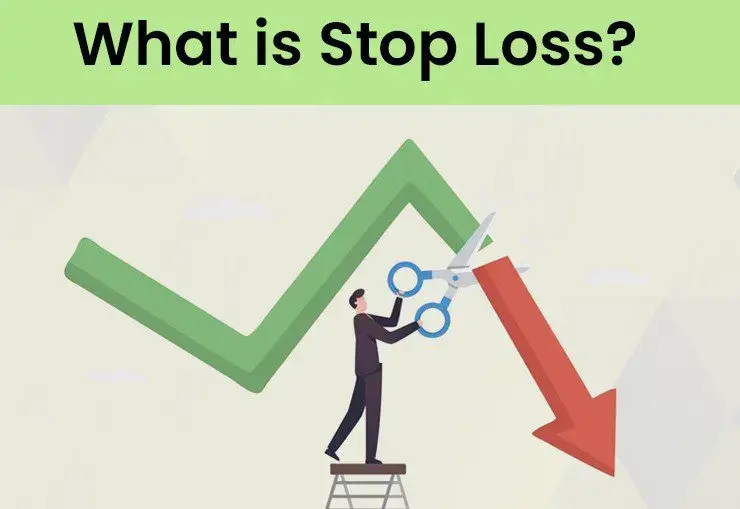
A stop loss is an instruction to your exchange to close a position once price hits a level you define, known as the trigger price. Depending on the order type, it converts into either a market order or a limit order once triggered. Before that trigger is hit, the order usually doesn't appear on the exchange's order book, which is why it's sometimes called a conditional order.
Say you buy Bitcoin at $100,000 and, based on your strategy, you're not willing to risk more than 10%. You'd set your stop loss at $90,000. If price falls to that level, the position closes automatically and your loss is capped.
One caveat worth remembering: a stop loss doesn't guarantee execution at the exact price you set. In fast-moving markets, slippage can occur, the order fills a bit above or below your trigger because price moved too quickly. A stop loss manages risk; it isn't a guarantee of a precise exit price.
Stop Loss vs. Stop-Limit Orders
A stop-limit order is different from a standard (stop-market) stop loss. With a stop-limit, you set both a trigger price and the exact execution price. Once triggered, it becomes a limit order, which means if the market moves too fast or liquidity dries up, it might not fill at all. A stop-market order, by contrast, executes at the best available price once triggered, so it's far more likely to actually close the position.
What Is a Trailing Stop?
A trailing stop moves with price. If the market moves in your favor, the stop level follows it automatically; if price reverses, the stop stays put at its last position.
For example, if you buy Bitcoin at $100,000 with a 5% trailing stop, your stop level rises as price rises. This protects gains you've already made without capping how far the trade can run, one reason it's a favorite tool among active traders.
Stop Loss Isn't Just for Selling
A common misconception is that stop losses only apply when you're worried about a purchased asset losing value. In reality, they work for both long and short positions.
Stop Loss vs. Liquidation
New traders often confuse a stop loss with liquidation, but they're not the same thing. A stop loss is a level you set and can adjust at will. Liquidation happens when losses reach a point where the exchange or broker force-closes your position, it's out of your control.
Professional traders treat the stop loss as a tool for exiting before liquidation ever becomes a risk. And it's worth being clear about the goal here: a stop loss isn't designed to eliminate losses entirely. No trader even the most experienced, wins every trade. Its purpose is to keep losses small and manageable so capital survives to trade another day.
What Is Take Profit in Crypto Trading?

A take-profit order locks in gains automatically once price reaches your target, removing the need to watch the market constantly.
On a long position, take profit sits above your entry; on a short, it sits below. If you buy Bitcoin at $100,000 with a target of $110,000, that's where you'd set it.
Take profit is typically executed as a limit order, the trade closes at your target price or better, but only if price actually reaches that level.
Scaling Out With Multiple Take-Profit Levels
A single take-profit level doesn't always capture the best exit. Price might keep running after hitting your target. That's why many professional traders scale out instead, setting multiple targets (TP1, TP2, TP3) and closing portions of the position at each. This locks in partial profit early while leaving room to capture more upside if the trend continues; A technique that suits crypto's volatility particularly well.
Traders typically build these levels from technical analysis, fundamental analysis, and risk management inputs: support and resistance zones, price patterns, risk/reward ratio, average volatility, and upcoming news events.
Take profit works best paired with a stop loss. One defines how much you're willing to lose if your analysis is wrong; the other defines where you'll bank profit if it's right.
Risk-to-Reward Ratio: The Real Purpose of TP/SL
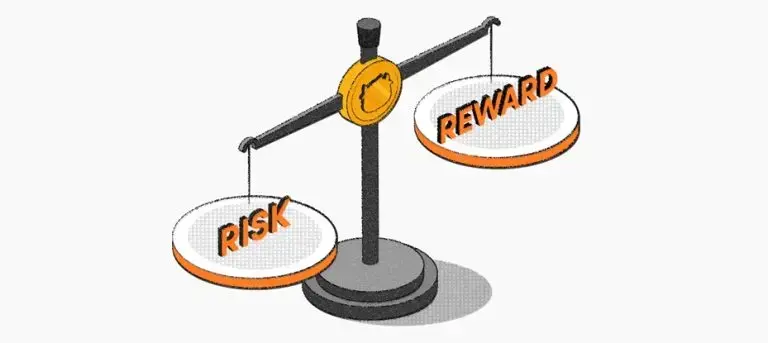
Stop loss and take profit aren't just exit tools, together they let you calculate a trade's risk/reward ratio, which shows how much potential profit you're targeting relative to how much you're risking.
To calculate it, you need three prices: entry, take profit, and stop loss.
For example, buy an asset at $100, set take profit at $120 and stop loss at $90. Potential profit is $20, potential loss is $10: A 1:2 risk/reward ratio. For every $1 risked, you're targeting $2 in return.
Most professional traders check this ratio before entering a trade, and many won't take setups below 1:2 unless win probability looks unusually strong. Ratio alone isn't the full picture, though; win rate matters too. A trader can be profitable long-term even winning fewer than half their trades, provided the risk/reward math is favorable enough.
Types of Stop-Loss and Take-Profit Orders
Stop-Market: Triggers an automatic exit once price hits your set level.
Main advantage: very high fill rate.
Watch out for: possible slippage on fast moves.
Stop-Limit: Exits at a set price or better once triggered.
Main advantage: more control over execution price.
Watch out for: it may not fill at all in volatile, fast-moving markets.
Trailing Stop: Follows price automatically as the trade moves in your favor.
Main advantage: protects profit during strong trends.
Watch out for: the trade closes if price reverses and touches the trailing level.
Take Profit: Executes an automatic exit once price reaches your target.
Main advantage: locks in gains without you needing to watch the market.
Watch out for: you may miss further upside if price keeps running past your target.
Multiple Take Profit: Exits the position gradually across several price targets.
Main advantage: better profit management and reduced risk.
Watch out for: it requires more detailed planning than a single exit point.
How to Set the Right Stop-Loss and Take-Profit Levels
These levels shouldn't come down to guesswork or gut feeling, they need to be grounded in analysis and risk management.
Support and resistance: One of the most common approaches: place stop loss just below support, take profit near resistance. It's based on how price has actually behaved historically and works across most markets.
Risk/reward ratio: Check this before entering any trade. Many professional traders won't go below 1:2. if your stop loss is 5% away, your take profit should be at least 10% away.
Market volatility: Volatile markets need wider stops. Placing a stop too close to entry in a choppy market often leads to premature exits. Some traders use indicators like ATR to size this properly.
Trading timeframe: Shorter-term trades usually call for tighter targets; medium and long-term trades can afford wider stop loss and take profit levels so normal volatility doesn't shake you out early.
Position sizing: Even a well-placed stop loss only works if trade size is appropriate. Most professional traders risk no more than 1-2% of total capital per trade, meaning position size and stop loss need to be calculated together, not separately.
There's no magic number here. The right exit levels are the ones aligned with your market analysis, risk tolerance, and overall strategy.
Stop-Loss and Take-Profit in Futures Trading
In futures trading, setting these levels matters even more than in spot trading, because leverage means even small price moves can multiply gains or losses. Stop loss should be defined before opening a leveraged position to keep price well away from the liquidation zone, and both levels should be based on risk/reward math and position size, not emotion or hope that the market turns back your way. Most experienced futures traders won't open a position without both set in advance.
Why Automatic Stop-Loss and Take-Profit Matter
The biggest advantage of these orders is that they execute without you having to watch the market. Benefits include:
- Fewer emotional, impulsive decisions
- Better risk control and capped losses
- Locked-in profit once targets are hit
- Trades can be managed even while you're away from the screen
- Less time spent monitoring price action
This is a core part of capital management in any financial market, and it's used by the vast majority of professional traders.
Position Sizing: Calculating Trade Size Based on Risk
A common mistake is deciding position size first, then figuring out a stop loss afterward. Professional traders do it in reverse: they decide what percentage of capital they're willing to risk, then size the trade accordingly, typically no more than 1-2% of total capital per trade.
For example: with $1,000 in capital and a 2% risk limit, a single trade shouldn't lose more than $20. Position size should be calculated so that hitting the stop loss doesn't exceed that amount. This approach means a string of losing trades won't wipe out your capital, and you're able to keep trading.
Common Mistakes When Setting Stop Loss and Take Profit
Setting stop loss too tight: Placing it too close to entry means normal market noise can trigger it even when your analysis was correct. Base it on market structure, support/resistance, or volatility instead.
Unrealistic take-profit targets: Setting targets too far from current price often means the market reverses before ever reaching them. Keep targets grounded in real analysis.
Constantly moving TP/SL: Repeatedly adjusting these levels out of fear or greed is one of the leading causes of trading losses. Set them before entering a trade and only revise if market conditions genuinely change.
Ignoring risk/reward ratio: Focusing only on potential profit while ignoring risk is a common trap. Always check that potential reward justifies the risk before entering.
Trading without a stop-loss at all: Arguably the biggest mistake of all. No analysis is ever guaranteed correct, and the market can always move against you. A stop loss is your last line of defense against major losses.
Stop-loss and take-profit aren't designed to maximize profit, their real job is protecting capital and managing risk over the long run.
Setting Stop-Loss and Take-Profit When Trading Bitcoin
Bitcoin and other cryptocurrencies are highly volatile, which makes defining exit points especially important. Many traders focus only on potential upside when buying Bitcoin, but failing to set an exit plan can just as easily mean giving back profit or letting losses grow.
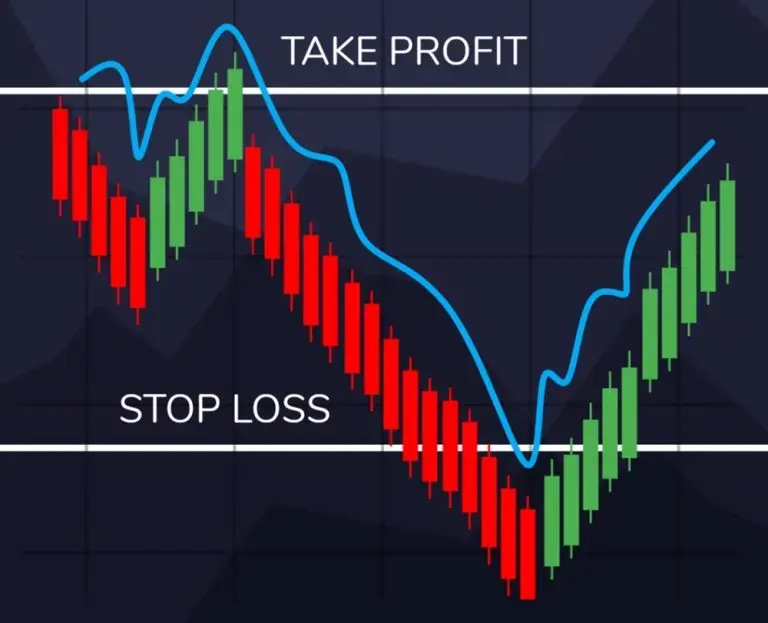
For example, if Bitcoin is trading at $100,000 and your analysis points to $110,000, that's a reasonable take-profit level. If you're willing to risk up to 5%, a stop loss around $95,000 would match that. Before buying Bitcoin, it's worth checking current price action and market conditions alongside setting both levels, so your trade follows a plan rather than a hunch.
Final Thoughts
Stop-loss and take-profit are essential risk management tools in crypto trading. A stop-loss automatically closes a losing position before damage compounds, and it works for both long and short positions. Take-profit locks in gains at a predefined level, so you're not relying on willpower or emotion to exit at the right time. Used together, they let you manage risk/reward on every trade and stay protected against sudden market swings.
FAQ
What are stop loss and take profit? Stop-loss and take-profit are risk management tools. Take-profit closes a trade at a target price with a gain; stop-loss prevents losses from growing further.
How do I set the right stop-loss and take-profit levels? Common approaches include support and resistance levels, risk/reward ratio, market volatility, and overall trading strategy. These levels shouldn't be chosen randomly or emotionally.
What is the risk/reward ratio? It shows how much potential profit you're targeting relative to how much you're risking. Many professional traders look for ratios of 1:2 or better.
What is the stop-loss trigger price? The trigger price is the level at which, once the market reaches it, the stop-loss order activates. Before that, the order sits in a pending state.
Which type of stop loss is designed to protect profit in a rising trade? A trailing stop is built for this, it moves along with price and protects accumulated profit if the market reverses.
How do automatic stop-loss and take-profit orders work? Once set, the trading system monitors the market automatically. When price reaches the defined level, the order executes without requiring direct trader intervention.