What Is Arbitrage Trading?
Financial markets often appear highly efficient, with prices constantly adjusting based on supply and demand. In reality, however, price discrepancies can occasionally emerge between different exchanges, markets, or trading platforms.
These temporary pricing gaps create opportunities known as arbitrage. Rather than predicting whether an asset will rise or fall in the future, arbitrage traders seek to profit from price differences that already exist in the market.
Arbitrage is widely used across traditional financial markets, forex, commodities, and cryptocurrencies. While the concept is relatively simple, successfully executing arbitrage strategies often requires speed, discipline, and careful risk management.

How Does Arbitrage Work?
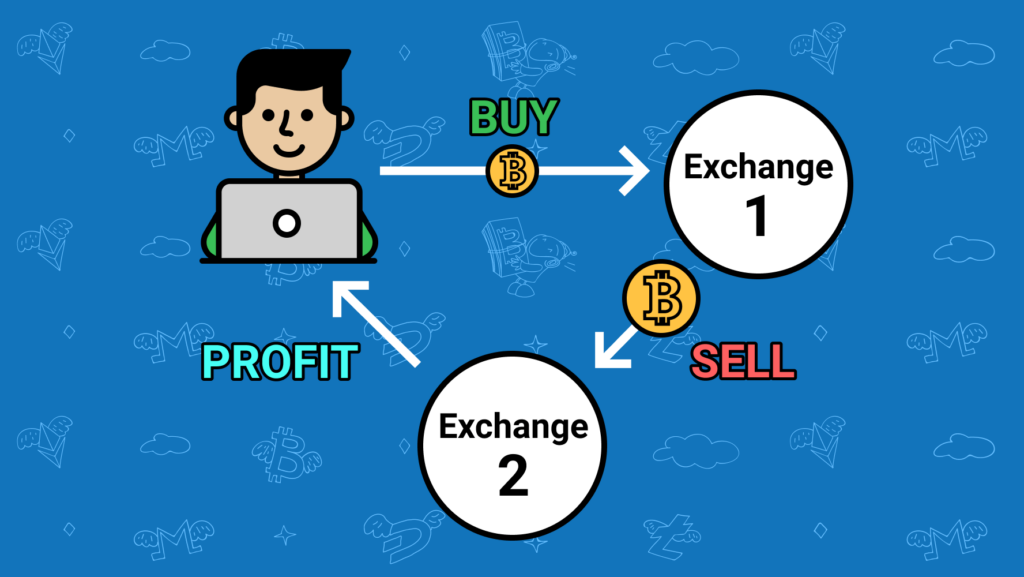
Arbitrage occurs when the same asset is available at different prices in separate markets.
For example, imagine Bitcoin is trading at:
- $105,000 on Exchange A
- $105,500 on Exchange B
A trader could theoretically buy Bitcoin on Exchange A and simultaneously sell it on Exchange B, capturing the $500 price difference before the gap closes.
Because markets constantly seek efficiency, these opportunities usually last only a short time before prices converge.
Why Do Arbitrage Opportunities Exist?
Although financial markets are highly competitive, price differences can still occur for several reasons:
Market Inefficiencies
Different exchanges may have varying levels of liquidity, trading activity, and user demand, causing temporary pricing imbalances.
Geographic Differences
Local regulations, banking systems, and investor demand can lead to price variations between regions.
Volatility
During periods of sharp market movement, prices can change so quickly that some platforms temporarily lag behind others.
Liquidity Constraints
Assets with lower trading volume are more likely to experience noticeable price discrepancies across markets.
Common Types of Arbitrage Trading
Exchange Arbitrage
The most common form involves buying an asset on one exchange and selling it on another where the price is higher.
This strategy is particularly popular in cryptocurrency markets due to the large number of global exchanges.
Triangular Arbitrage
Triangular arbitrage uses price differences between three different trading pairs on the same exchange.
For example:
- BTC/USDT
- ETH/BTC
- ETH/USDT
If the exchange rates are temporarily out of balance, traders may be able to profit through a sequence of rapid trades.
Futures and Spot Arbitrage
This strategy takes advantage of price differences between spot markets and futures contracts.
When futures trade at a significant premium or discount to the underlying asset, traders may execute hedged positions to capture the spread.
Cross-Market Arbitrage
Professional firms sometimes exploit pricing differences between related financial products such as ETFs, stocks, commodities, or derivatives.
Arbitrage in Cryptocurrency Markets
Crypto markets are among the most active environments for arbitrage trading.
Because digital assets trade 24/7 across hundreds of exchanges worldwide, pricing differences can emerge more frequently than in traditional markets.
Popular arbitrage opportunities often involve:
- Bitcoin (BTC)
- Ethereum (ETH)
- Stablecoins
- High-volume altcoins
- Futures and perpetual contracts
However, increased competition and automated trading systems have made many opportunities smaller and shorter-lived than in previous years.

Risks of Arbitrage Trading
Although arbitrage is often viewed as a lower-risk strategy, it is not entirely risk-free.
Transaction Fees
Trading fees, withdrawal fees, and network costs can significantly reduce profits.
Execution Risk
Prices may change before both sides of a trade are completed, eliminating the expected profit.
Transfer Delays
Moving assets between exchanges can take time, especially during periods of network congestion.
Liquidity Issues
Large trades may move the market price and reduce profitability.
Regulatory Considerations
Different jurisdictions may have varying rules regarding trading activities, taxation, and asset transfers.
Is Arbitrage Still Profitable?
Arbitrage opportunities continue to exist, but they are generally more competitive than in the past.
Large institutional traders and automated trading bots actively monitor markets around the clock, quickly identifying and exploiting pricing inefficiencies.
As a result, successful arbitrage traders typically focus on:
- Low transaction costs
- Fast execution
- Reliable infrastructure
- Effective risk management
- Access to multiple exchanges
For retail traders, arbitrage can still be a useful strategy, but profitability often depends on finding opportunities where fees and execution risks remain manageable.
Final Thoughts
Arbitrage trading is one of the oldest and most widely used strategies in financial markets. Instead of speculating on future price movements, traders attempt to profit from temporary pricing inefficiencies that exist across markets or trading instruments.
While the concept is straightforward, successful arbitrage requires careful planning, fast execution, and a thorough understanding of transaction costs and market risks.
For crypto traders, understanding arbitrage can also provide valuable insight into how market pricing works and why prices sometimes differ across exchanges.