Margin trading is one of the most widely used and widely misunderstood tools in both traditional and crypto markets. It lets traders borrow capital from an exchange or broker to open positions larger than their actual account balance. Used well, it can meaningfully increase potential returns. Used carelessly, it can wipe out an account fast.
This guide covers how margin trading actually works, the key terminology every trader should know before using it, and the risks that make it unsuitable for a lot of market participants.
What Is Margin?
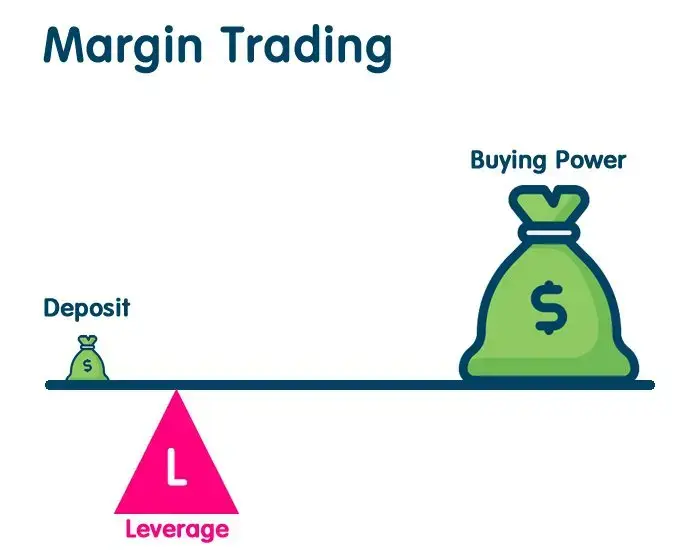
In trading, margin refers to the collateral a trader deposits with a broker or exchange in exchange for borrowed capital. That collateral protects the platform's exposure, since the trader is using someone else's money to trade, the platform needs a guarantee it can recover if the trade goes wrong. Margin is what makes leverage possible, and leverage is what can multiply both gains and losses.
Margin vs. Leverage: What's the Difference?
These two terms get used interchangeably, but they're not the same thing. Margin is the actual capital or collateral you put up. Leverage is the multiplier that determines how large a position that collateral can support.
For example: if you have $200 and use 5x leverage, you can open a $1,000 position. The $200 is your margin; the 5x is your leverage. Higher leverage means higher potential profit, but also a proportionally higher chance of liquidation.
In that same example, a 10% price move in your favor turns into a $100 gain (not $20), because returns are calculated on the full $1,000 position size. But a 10% move against you means a $100 loss on the same $200 of capital. If losses exceed the exchange's threshold, the position gets liquidated automatically to prevent the debt from growing further.
Advantages of Margin Trading
Access to leverage. In a standard trade, you're limited to your own capital. Margin lets you trade with borrowed funds, opening positions several times larger than your account balance.
Amplified returns. Because leverage multiplies position size, it also multiplies the profit potential on a winning trade, though the same math applies in reverse.
Repayment flexibility. Unlike many traditional loans, margin balances typically don't come with a fixed repayment schedule. As long as you stay within the exchange's margin requirements, you can repay the borrowed amount after closing your position.
Risks of Margin Trading
Interest costs. Borrowing isn't free. Exchanges typically charge interest on margin funds, commonly in the 4-12% range, depending on the platform and market conditions, regardless of whether your trade is profitable.
Margin calls. If a losing position pushes your account balance below a required threshold, the exchange issues a margin call, requiring you to deposit more funds. Fail to do so, and the position gets closed along with your capital.
Liquidation. If you can't meet a margin call, the exchange liquidates the position automatically, often with little to no advance notice. This is how traders lose their entire margin balance in a single move.
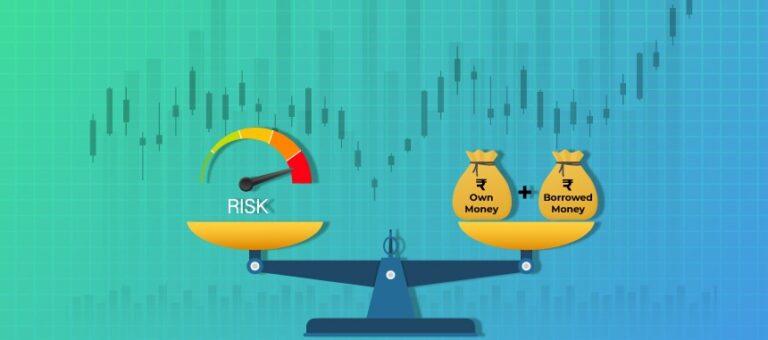
Amplified losses. The same leverage that boosts gains boosts losses just as fast. Without proper risk management, a position sized several times your actual capital can wipe out an account quickly if price moves against you.
Common Mistakes Margin Traders Make
- Using excessive leverage: The higher the leverage, the faster both gains and losses compound and the closer you sit to liquidation.
- Trading without a stop-loss: No defined exit means a sharp move can do outsized damage before you react.
- Over-allocating to a single position: Putting most or all of your capital into one trade removes your margin for error.
- Trading around major news events: Volatility spikes around economic releases or major headlines can trigger liquidation faster than a trader can respond.
- Ignoring trading costs: Fees and interest add up, especially on positions held open for extended periods, and can quietly erode profitability.
Key Margin Trading Terms
Minimum Margin: The minimum deposit required to open a margin account in the first place, set by the exchange or broker's policy.
Maintenance Margin: The minimum account balance a trader must maintain after opening a position. Under FINRA rules, this is commonly set at 25% of the total position value. Falling below it triggers a margin call.
Margin Call: A demand from the exchange to add funds when your account balance drops below the required maintenance level. Ignoring it typically results in the position being closed automatically.
Initial Margin: The percentage of a position's value that must be paid in cash upfront. For example, buying $10,000 of an asset with a 50% initial margin requirement means putting up $5,000 yourself and borrowing the rest.
Liquidation: In margin trading specifically, this refers to the exchange forcibly closing a losing position once your balance drops below the maintenance margin, in order to recover the borrowed funds.
Free Margin vs. Used Margin: Free margin is the portion of your account balance available for withdrawal or new trades. Used margin is the portion currently tied up as collateral for open positions. Free margin equals total balance minus used margin.
Isolated Margin: Margin allocated to a single position. If that position is liquidated, it doesn't affect the rest of your account; A useful risk-containment tool for newer traders.
Cross Margin: Margin shared across all open positions, meaning losses on one trade can be offset by gains on another. This maximizes capital efficiency but also increases overall account risk.
How Margin Is Calculated
Margin level is the key metric used to determine whether an account can still support open positions or new trades. The formula is:
Margin Level = Equity / Used Margin × 100
For example, an account with $10,000 in equity and $2,000 in used margin has a margin level of:
$10,000 / $2,000 × 100 = 500%
A margin level of 500% means the account holds five times the margin required to keep current positions open. The lower this number drops toward 100%, the higher the risk of a margin call.
Long and Short Margin Positions
Margin trading works in both directions. A long position means borrowing funds to buy an asset you expect to rise in price. A short position means selling an asset at the current price, again using borrowed funds with the intent to buy it back later at a lower price.
Margin vs. Spot Trading
Spot trading involves buying or selling an asset at the current market price using capital you actually hold, with no borrowing and no leverage involved. Because there's no borrowed money at stake, spot trading carries meaningfully less risk than margin, a losing spot trade costs you a portion of your capital, but you never owe the exchange money beyond what you put in.
Margin vs. Futures Trading
Futures contracts involve agreeing to buy or sell an asset at a specified price on a future date, without ever owning the underlying asset. Leverage on futures contracts is typically higher than on margin trades, and margin in this context primarily serves to guarantee that a trader can meet their contractual obligations.
Where Margin Trading Fits in Crypto Markets
In crypto specifically, margin trading is mostly used to capture short-term price swings. Traders who study Bitcoin's price action and form a directional view, (bullish or bearish) often use margin to open long or short positions accordingly. Because leverage is involved, even relatively small price moves can produce outsized gains or losses.
That said, margin isn't the right tool for every trader. Long-term holders who prefer to avoid leveraged risk generally stick to buying assets outright on the spot market. Margin tends to suit traders actively working shorter timeframes who have the experience and the risk tolerance to manage leveraged exposure. Which approach fits best comes down to trading experience, strategy, and personal risk appetite.
Final Thoughts
Margin trading is a legitimate tool that, used with discipline, can improve capital efficiency and open up strategies that spot trading alone can't support. But the same leverage that amplifies gains amplifies losses just as fast, and the risks, margin calls, liquidation, ongoing interest costs are real and immediate, not theoretical. Traders who do well with margin tend to share a few habits: modest leverage, defined stop-losses, disciplined position sizing, and constant awareness of their margin level. Without that discipline, margin can turn a manageable drawdown into a total loss of capital.
FAQ
What is margin trading? Margin trading is a method of trading using funds borrowed from an exchange or broker, allowing traders to open positions larger than their own capital would otherwise support.
Is margin trading risky? Yes. Because margin trading uses borrowed funds, a losing trade can result in losses beyond what a trader would face with unleveraged capital. Sound risk management is essential to limit this exposure.
What is a margin call? A margin call happens when your account balance drops below the minimum required to keep a leveraged position open. The exchange or broker will close the position unless you add funds to bring the balance back up.
How can I avoid liquidation in margin trading? Use conservative leverage, set a stop-loss on every position, avoid over-allocating capital to a single trade, and monitor your margin level regularly.
What's the difference between isolated and cross margin? Isolated margin limits risk to the capital assigned to a specific position. Cross margin uses your entire available balance as collateral across all open positions, which can help prevent liquidation but also increases total account risk.