How the New Crypto Payment System Works
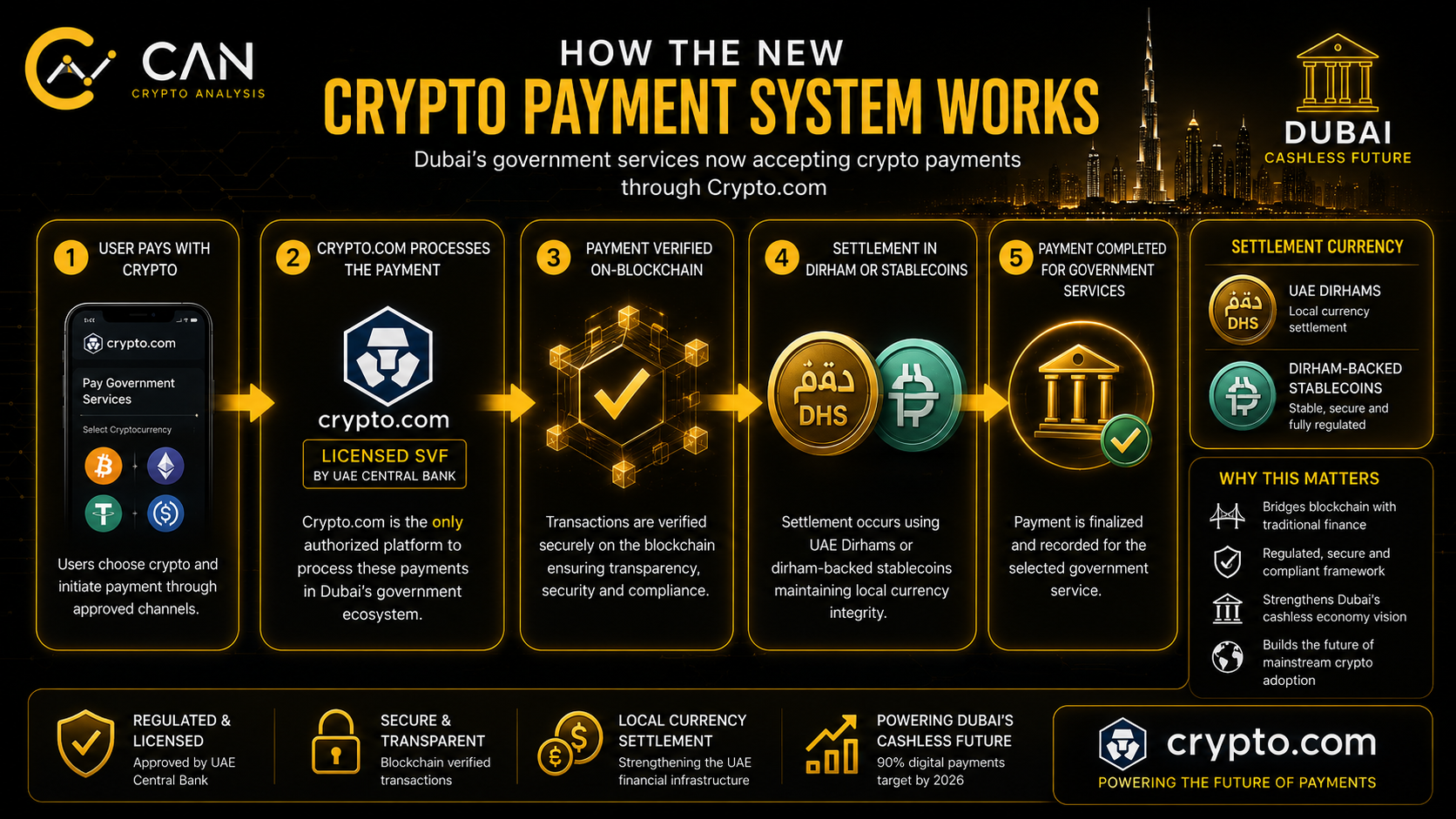
According to official statements, Crypto.com is currently the only platform authorized to process this category of crypto payments within Dubai’s government ecosystem.
Under the new framework, users will be able to pay for certain government-related services using cryptocurrencies through approved payment channels.
Transaction settlement will reportedly occur using:
- UAE dirhams
- dirham-backed stablecoins
This structure helps bridge blockchain payment systems with traditional financial infrastructure while maintaining local currency settlement mechanisms.
The move highlights how stablecoins and regulated crypto payment rails are increasingly being integrated into mainstream financial systems rather than operating entirely outside them.
Part of Dubai’s “Cashless Strategy” Initiative
The crypto payment rollout is part of Dubai’s broader “cashless” economic strategy.
Authorities aim to digitize approximately 90% of government and private sector payments by 2026 as part of the city’s ongoing smart economy initiatives.
Dubai has spent years building infrastructure around:
- blockchain technology
- fintech innovation
- digital identity systems
- virtual asset regulation
- crypto licensing frameworks
This latest development reflects a wider trend where governments are experimenting with regulated blockchain applications beyond speculative trading markets.
Instead of viewing crypto solely as an investment asset, policymakers increasingly see blockchain technology as financial infrastructure capable of supporting payments, settlement systems, and digital commerce.
Why Dubai Has Become a Major Crypto Hub
Over recent years, Dubai and the broader United Arab Emirates have emerged as one of the most active regions for crypto and blockchain development.
Several factors contributed to this growth:
- regulatory clarity
- fintech-friendly policies
- virtual asset licensing systems
- global business accessibility
- investment in digital infrastructure
The region has attracted:
- crypto exchanges
- blockchain startups
- Web3 developers
- institutional investors
- fintech companies
Dubai’s regulatory approach has often focused on controlled integration rather than outright restriction, allowing licensed companies to operate within defined legal frameworks.
This environment has helped position the city as a gateway between traditional finance and emerging blockchain technologies.
The Growing Role of Stablecoins in Payments
One notable aspect of the new system is the use of dirham-backed stablecoins for settlement.
Stablecoins have become increasingly important in crypto payment infrastructure because they reduce the volatility typically associated with cryptocurrencies like:
- Bitcoin
- Ethereum
By maintaining values tied to fiat currencies, stablecoins can function more effectively for:
- payments
- remittances
- settlement systems
- cross-border transfers
- digital commerce
Many analysts believe stablecoins may ultimately become one of the most practical real-world applications of blockchain technology.
What This Means for the Crypto Industry
Dubai’s decision reflects a broader evolution happening across global financial systems.
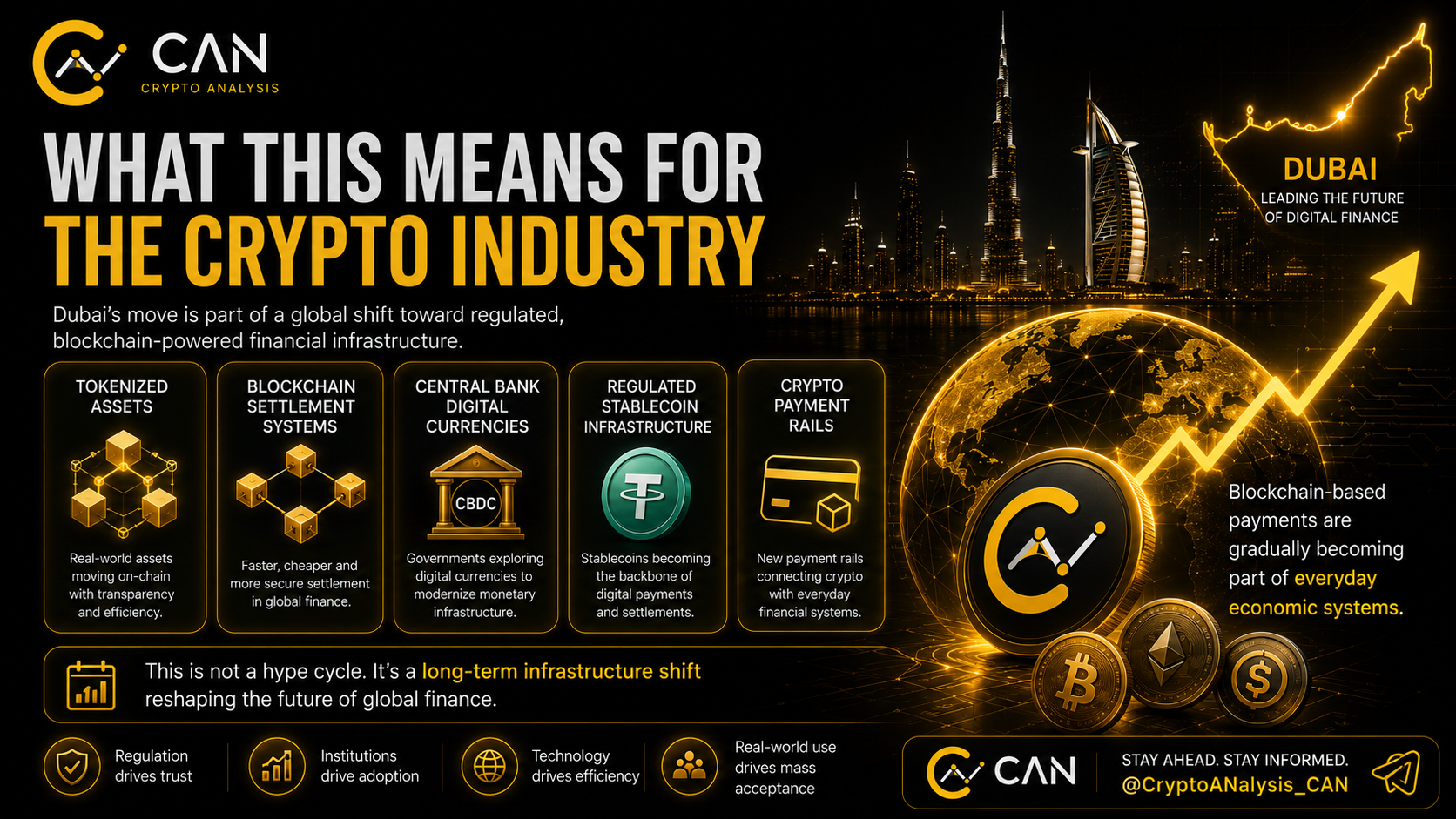
Early crypto adoption was largely driven by trading and speculation. Today, governments and financial institutions are increasingly exploring:
- tokenized assets
- blockchain settlement systems
- central bank digital currencies
- regulated stablecoin infrastructure
- crypto payment rails
While large-scale public adoption still faces regulatory and technical challenges, integrations like Dubai’s suggest that blockchain-based payments are gradually moving into everyday economic systems.
The process resembles a slow infrastructure shift happening beneath the surface of global finance rather than a sudden overnight transformation.
Final Thoughts
Dubai’s approval of crypto payments for government services represents another milestone in the ongoing integration of blockchain technology into real-world financial infrastructure.
Through its partnership with Crypto.com and broader cashless economy initiatives, the city continues positioning itself at the forefront of regulated digital finance innovation.
As stablecoins, blockchain payments, and regulated crypto platforms continue evolving, similar models may eventually appear in other financial centers around the world.
For the broader crypto industry, the development highlights a growing transition from speculative use cases toward practical financial applications.