USDT vs DAI: Understanding the Difference Between Two Major Stablecoins
Stablecoins have become one of the most important parts of the cryptocurrency ecosystem. They act as a bridge between traditional finance and digital assets by offering cryptocurrencies designed to maintain stable value, usually pegged to the US dollar.
Among the many stablecoins available today, Tether and Dai remain two of the most widely recognized options in the market.
While both aim to maintain a value close to one US dollar, they operate very differently behind the scenes. Their structures, transparency models, and levels of decentralization each appeal to different types of crypto users.
This guide compares USDT and DAI in simple terms to help readers better understand how these stablecoins function within the broader crypto market.
What Is USDT?
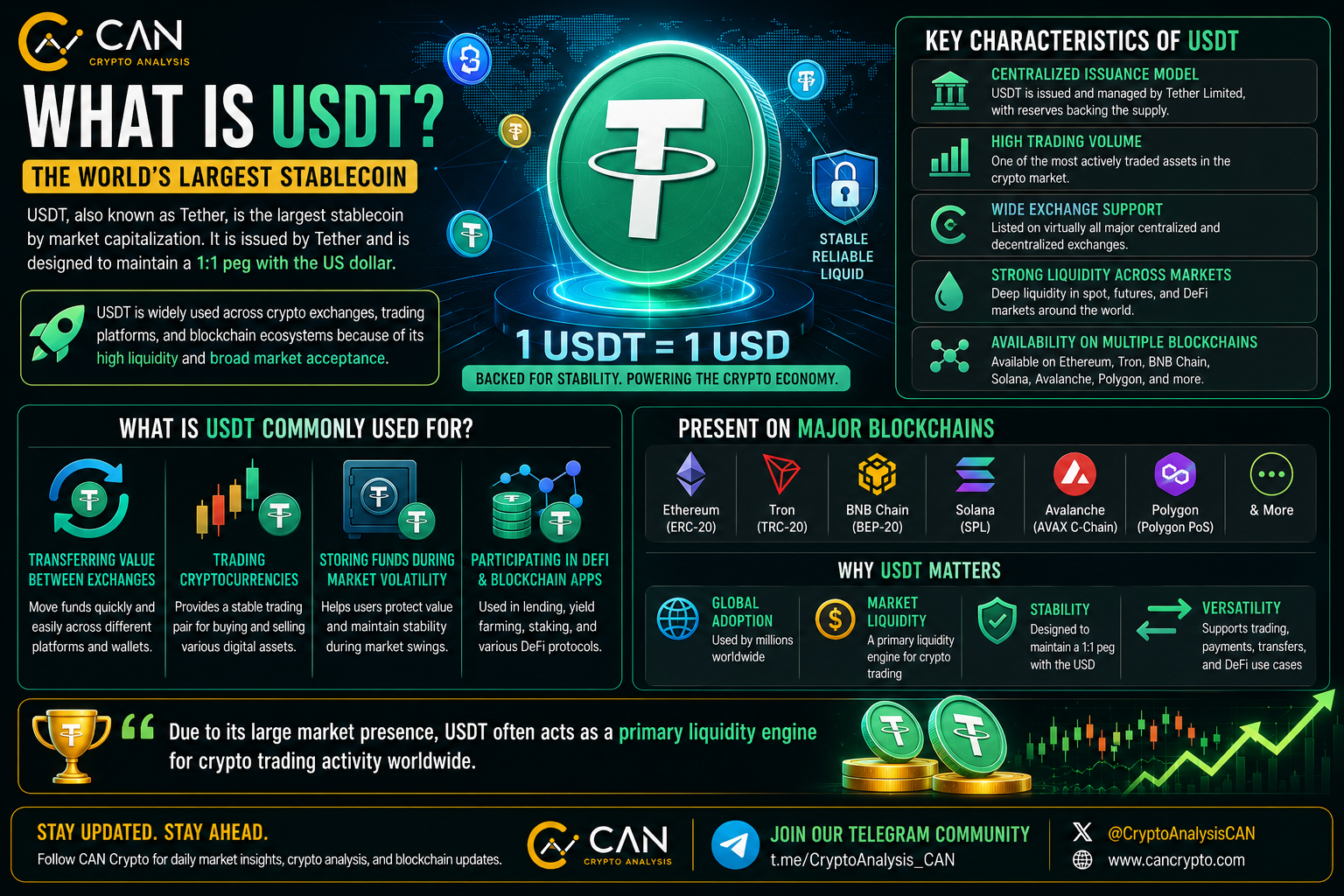
USDT, also known as Tether, is the largest stablecoin by market capitalization.
It is issued by Tether and is designed to maintain a 1:1 peg with the US dollar. USDT is widely used across crypto exchanges, trading platforms, and blockchain ecosystems because of its high liquidity and broad market acceptance.
Key characteristics of USDT include:
- centralized issuance model
- high trading volume
- wide exchange support
- strong liquidity across markets
- availability on multiple blockchains
USDT is commonly used for:
- transferring value between exchanges
- trading cryptocurrencies
- storing funds during market volatility
- participating in DeFi and blockchain applications
Due to its large market presence, USDT often acts as a primary liquidity engine for crypto trading activity worldwide.
What Is DAI?
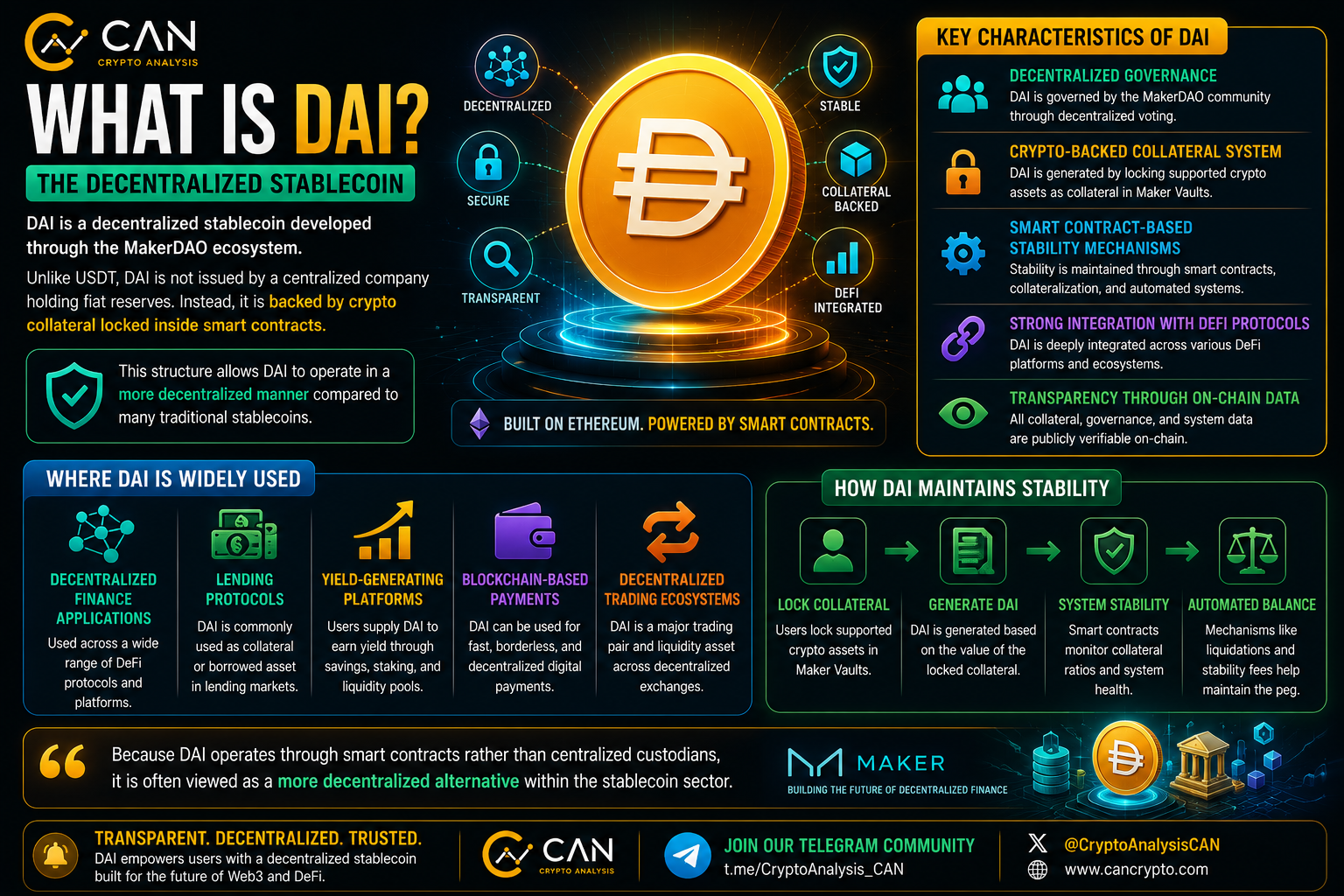
DAI is a decentralized stablecoin developed through the MakerDAO ecosystem.
Unlike USDT, DAI is not issued by a centralized company holding fiat reserves. Instead, it is backed by crypto collateral locked inside smart contracts.
This structure allows DAI to operate in a more decentralized manner compared to many traditional stablecoins.
Key characteristics of DAI include:
- decentralized governance
- crypto-backed collateral system
- smart contract-based stability mechanisms
- strong integration with DeFi protocols
- transparency through on-chain data
DAI is widely used in:
- decentralized finance applications
- lending protocols
- yield-generating platforms
- blockchain-based payments
- decentralized trading ecosystems
Because DAI operates through smart contracts rather than centralized custodians, it is often viewed as a more decentralized alternative within the stablecoin sector.
Centralization vs Decentralization
One of the biggest differences between USDT and DAI is how they maintain stability.
USDT’s Centralized Model
USDT relies on centralized reserves managed by Tether. This means users trust the issuer to maintain sufficient backing assets and preserve the stablecoin’s peg.
Advantages often associated with this model include:
- deep liquidity
- faster adoption
- simpler structure
- strong exchange integration
However, centralized systems may also face:
- regulatory scrutiny
- reserve transparency concerns
- dependency on centralized entities
DAI’s Decentralized Structure
DAI operates through collateralized smart contracts on blockchain networks, mainly within the Ethereum ecosystem.
Advantages commonly associated with DAI include:
- decentralized governance
- transparent on-chain mechanisms
- reduced dependence on centralized companies
- stronger integration with DeFi applications
At the same time, decentralized stablecoins may experience:
- more complex stabilization systems
- smart contract risks
- collateral volatility exposure
The difference between the two models reflects a larger debate inside crypto itself: convenience and liquidity versus decentralization and autonomy.
Which Stablecoin Is More Commonly Used?
Both stablecoins serve important roles, but their usage patterns differ.
USDT Dominates Trading Activity
USDT remains the most heavily traded stablecoin in the crypto market. It is supported by nearly all major exchanges and is frequently used in:
- spot trading
- futures markets
- cross-border transfers
- exchange liquidity pools
Its high liquidity makes it especially popular among active traders.
DAI Is Closely Connected to DeFi
DAI has become deeply integrated into decentralized finance ecosystems.
It is commonly used in:
- lending protocols
- decentralized exchanges
- on-chain borrowing systems
- yield farming applications
For users focused on decentralized applications and blockchain-native finance, DAI often plays a central role.
Risks Associated With Stablecoins
Although stablecoins aim to maintain stable value, they are not risk-free.
Potential risks include:
- regulatory pressure
- reserve management concerns
- smart contract vulnerabilities
- market liquidity issues
- depegging events during extreme volatility
Past market events have shown that even stablecoins can temporarily lose their dollar peg under stressful market conditions.
Because of this, many users diversify stablecoin exposure instead of relying entirely on a single asset.
Final Thoughts
USDT and DAI are two of the most influential stablecoins in the cryptocurrency industry, but they are built on very different philosophies.
USDT focuses on liquidity, exchange integration, and centralized reserve management, while DAI emphasizes decentralization, transparency, and smart contract infrastructure.
Neither model is universally “better.” Their usefulness often depends on how users interact with the crypto ecosystem, whether through active trading, decentralized finance, long-term storage, or blockchain applications.
As stablecoins continue evolving, understanding how they work is becoming increasingly important for anyone participating in digital asset markets.
About CAN Crypto Telegram Community
CAN Crypto Telegram Community is a crypto-focused educational community sharing blockchain insights, market analysis discussions, DeFi explanations, stablecoin research, and trader-focused educational content.
The community regularly covers:
- stablecoin market trends
- DeFi ecosystem developments
- Bitcoin and Ethereum updates
- blockchain technology concepts
- technical analysis education
- crypto market structure discussions
- risk management principles
The focus is on helping members better understand how the crypto ecosystem functions through research, market awareness, and educational content rather than hype-driven narratives.